How to Replace Furnace Filters: Step-by-Step Guide
Cold air sneaks in. Your heating system groans to life. But what happens if your furnace filter is clogged? Dirty filters can turn a cozy home or business into a dust-choked headache. At GOGO Heating, we help Huntington Station families and businesses breathe easier—one filter at a time.
Changing your furnace filter isn’t just a chore. It’s the secret ingredient to a healthier, more efficient HVAC system. Here’s how to do it right.
Why Filter Replacement Matters 🛠️
Think of your furnace filter as your system’s shield. It catches dust, pollen, pet hair, and other airborne debris before they can settle in your ducts or circulate through your space. But when that shield gets clogged, everything suffers:
- Your heating system works harder, using more energy.
- Airflow drops, so your rooms may never feel truly warm.
- Dust and allergens swirl, aggravating allergies or asthma.
- You risk damage to expensive furnace components.
According to the U.S. Department of Energy, replacing dirty filters can lower your heating system’s energy consumption by up to 15%. That’s less strain on your wallet—and your lungs.
How to Identify Filter Type and Size 📏
Before you dash to the hardware store, you’ll need to know two things: what kind of filter you need, and what size fits your system.
- Locate the filter slot. Most filters are inside the blower compartment or behind a return air grille.
- Read the old filter. The size is usually printed on the filter’s frame—something like “16x25x1”.
- Check your manual. If you’re unsure, your furnace manual lists compatible filter types and sizes.
- Know your filter type:
- Fiberglass panel: Cheapest, basic dust capture.
- Pleated: Traps finer particles, better for indoor air quality.
- Electrostatic: Washable, reusable, higher up-front cost.
- HEPA: Highest filtration, but not always suitable for all furnaces.
Tip: Never force a filter into place. If it doesn’t slide in easily, double-check the size and orientation.
Step-by-Step Replacement Instructions
Ready to roll up your sleeves? Here’s how to swap out your furnace filter—quickly and safely.
Step 1: Turn Off the Furnace
Safety first! Shut off your heating system at the thermostat or switch. This keeps dust from getting sucked in while you work.
Step 2: Find and Remove the Old Filter
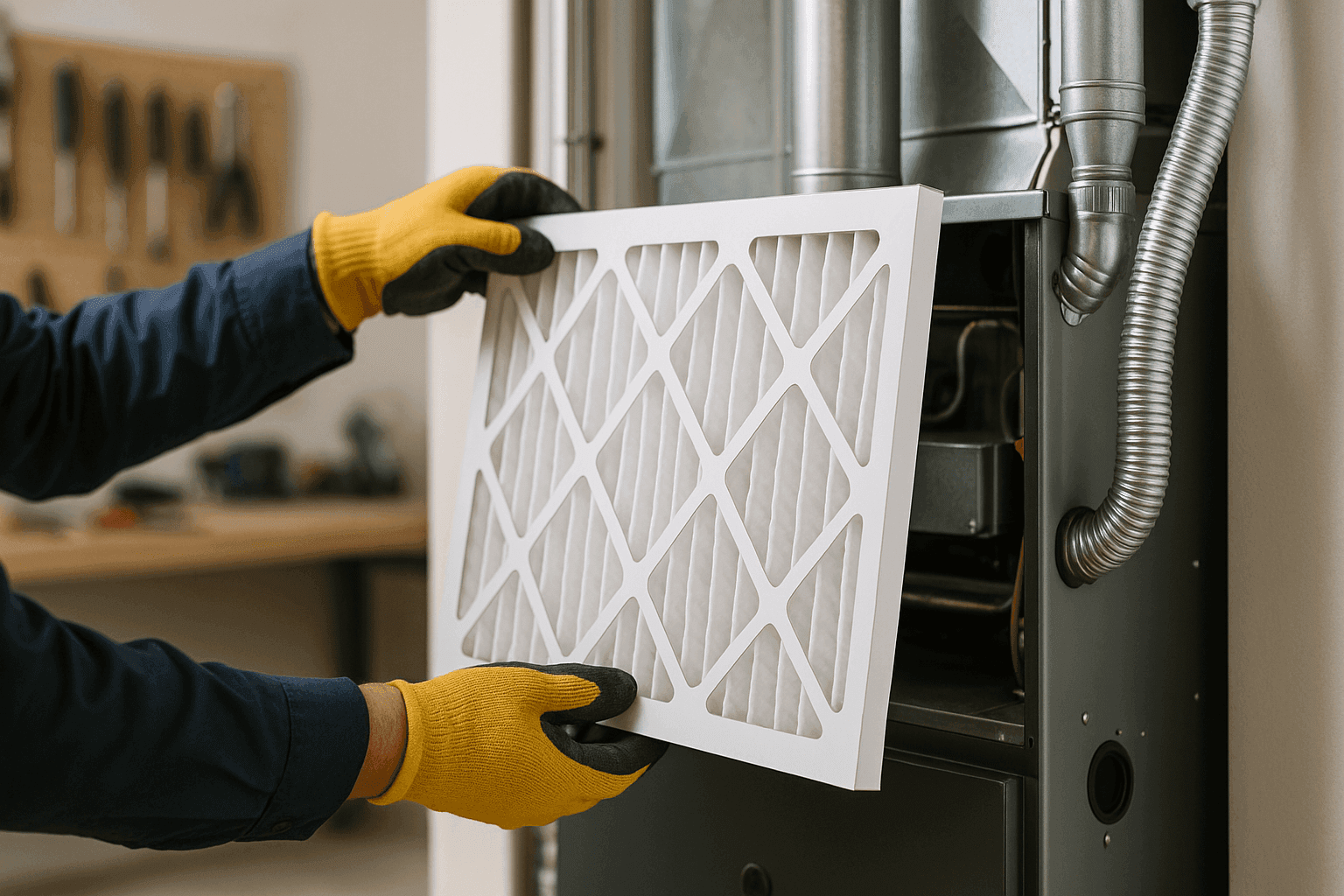
- Open the service panel or return air grille.
- Slide out the old filter carefully to avoid knocking debris loose.
Step 3: Inspect and Clean
- Check for dust buildup inside the slot.
- Wipe with a damp cloth if needed, but never reach into moving parts.
Step 4: Insert the New Filter
- Make sure the airflow arrows point toward the furnace blower.
- Slide the new filter into place—no gaps, no forcing.
Step 5: Restart the System
- Close the panel.
- Turn your heating back on.
- Listen for smooth operation—no extra rattling or whistling.
Confidence tip: Set a reminder on your phone or calendar. The best filter is a fresh one—changed on schedule.
Filter Replacement Frequency ⏰
How often should you swap your filter? It depends on your system, filter type, and environment:
- 1-inch filters: Every 1–3 months.
- Pleated filters (2–4 inches): Every 3–6 months.
- HEPA or specialty filters: Up to 12 months, but check monthly for dust buildup.
Consider more frequent changes if:
- You have pets or allergies.
- You run your heating system daily.
- Construction or remodeling is happening nearby.
Source: The Environmental Protection Agency (EPA) recommends regular filter checks to maintain indoor air quality.
Common Mistakes to Avoid ⚠️
Everyone slips up sometimes. Here’s what to watch out for:
- Using the wrong size. A loose filter lets dust sneak through the cracks.
- Installing backwards. Airflow matters! Follow the arrows.
- Skipping regular changes. Old filters clog, costing you comfort—and cash.
- Forgetting to turn off the system. Safety first, every time.
- Neglecting filter housing cleaning. Dust left behind can cause odors or even mold.
Key Benefits of Regular Filter Changes
- Better air quality. Filters catch dust, pollen, and even some bacteria.
- Lower bills. A clean filter means your system runs easier.
- Longer furnace life. Less strain, fewer breakdowns.
- Peace of mind. No more guesswork—just fresh, clean air.
For more on keeping your home or business breathing easy, see our IAQ Testing and Heating Maintenance services.
Confidence and Safety Tips
- Wear gloves if you’re sensitive to dust.
- Dispose of old filters in a sealed bag to avoid spreading dust.
- Check your system manual for any special instructions.
- If you ever smell burning or see visible mold, call a professional.
For local tips on filter selection or seasonal advice, see Filters in Huntington Station.
When to Call a Professional
Some filter slots are tricky or hard to reach. If you’re unsure, or if you spot issues like water leaks, rust, or heavy dust buildup, don’t risk it. GOGO Heating is always ready to help—day or night.
Frequently Asked Questions
Q: Can I use a higher-rated filter than my system recommends?
A: Not always. Too much filtration can reduce airflow and strain your system. Always follow your furnace’s guidelines.
Q: What if my filter looks clean?
A: Even if it looks okay, microscopic dust may clog the fibers. Stick to your schedule.
Q: Are washable filters worth it?
A: They’re reusable, but require regular cleaning and may not fit all systems.
Seasonal and Local Considerations
Here on Long Island and throughout the region, heating systems work overtime in winter. Dust, pollen, and humidity can vary by season. Fall and spring are ideal times to check and change filters, especially after heavy use.
Final Thoughts
Changing your furnace filter is the fastest way to boost heating efficiency and breathe healthier air. It’s a five-minute job that pays back all season long, whether you’re a homeowner, business owner, or property manager.
Call GOGO Heating now — or reach us anytime at 844-467-0847 .