Radiant Heating Systems: Everything You Need to Know
Stuck in a home or workplace that never quite feels warm—no matter how high you crank the thermostat? You're not alone. Many people wrestle with uneven heating, cold spots, or that dry, stuffy air common with older systems.
Radiant heating might be the answer. At GOGO Heating, we’ve seen how the right heating solution can turn a bone-chilling space into a cozy retreat. Whether you’re building new or upgrading, understanding your options is the first step.
What Is Radiant Heating? 🌡️
Picture stepping onto a sun-baked patio. That gentle warmth beneath your feet—that’s radiant heat in action. Instead of blasting hot air, radiant systems transfer warmth directly through floors, walls, or ceilings.
Here’s why that matters. Radiant heating doesn’t rely on moving air. Instead, it gently warms surfaces, which then radiate heat into the room. This approach can mean:
- Fewer cold spots
- Less dust and allergens swirling around
- A steady, comfortable warmth that just feels different
The U.S. Department of Energy notes that radiant heating is often more efficient than forced air, especially in homes with high ceilings or drafty rooms.
Types of Radiant Heating Systems
Not all radiant systems are the same. There are a few main types, each with strengths and special considerations:
1. Hydronic (Water-Based) Radiant Heating
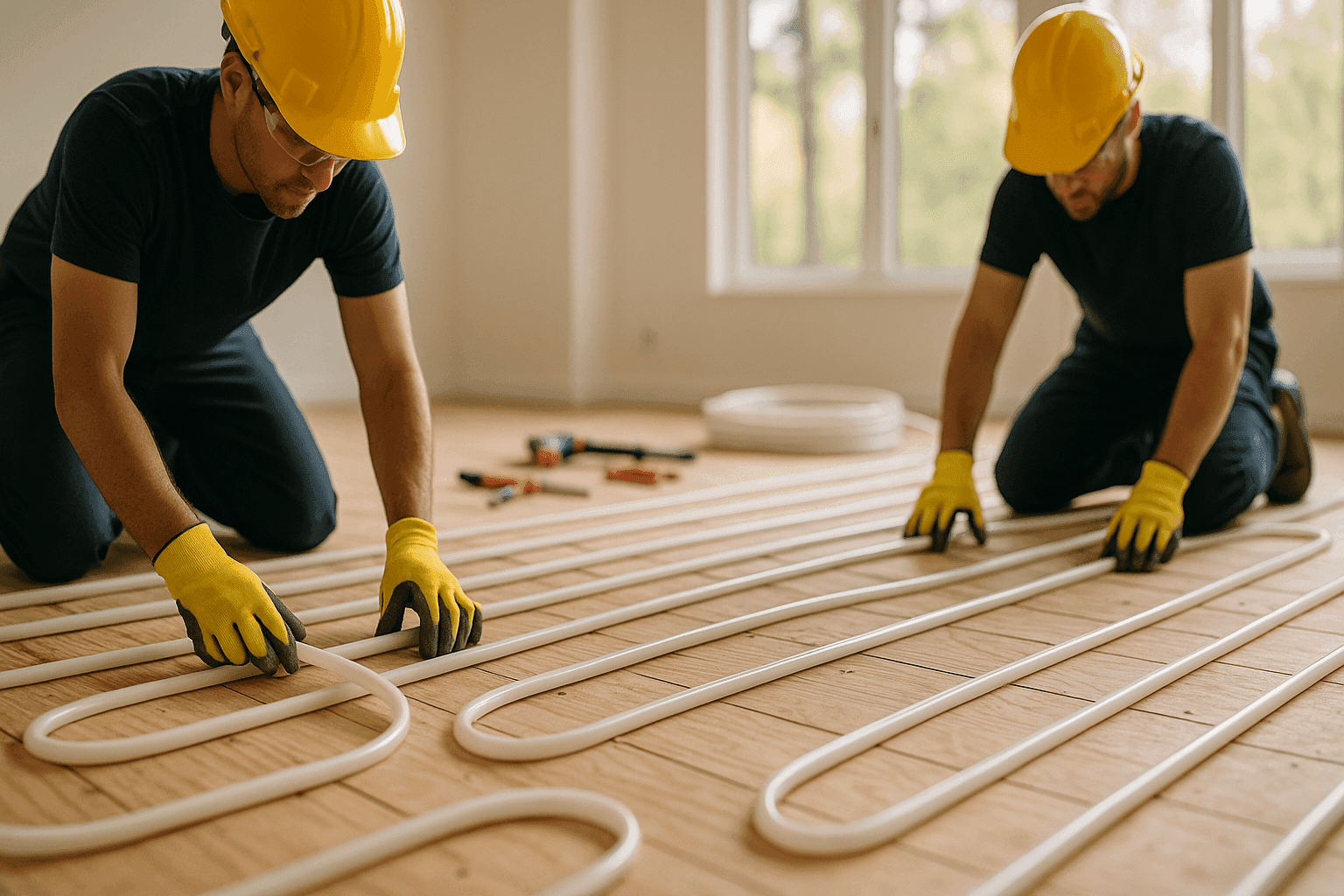
- Warm water circulates through flexible tubing beneath the floor or behind walls.
- Heated by a boiler, heat pump, or water heater.
- Works well for large areas and whole-home systems.
- Can be zoned for different rooms.
2. Electric Radiant Heating
- Uses electric cables or mats installed under flooring.
- Best for small spaces like bathrooms and kitchens.
- Heats up quickly but can be costly to run in larger areas.
3. Radiant Panels
- Mounted on walls or ceilings.
- Often electric, sometimes hydronic.
- Provide quick, targeted warmth.
Each type can work with a variety of floor coverings: tile, stone, laminate, and even some types of carpet. But not all flooring materials transfer heat equally—tile and stone are the standouts.
Installation Process Overview
Radiant heating installation isn’t a quick weekend project. But understanding the process helps you plan.
Hydronic System Installation
- Planning & Design: Layout is key. Installers design zones and select tubing routes to ensure balanced heating.
- Subfloor Prep: Subfloor is cleaned and insulated.
- Tubing Install: Pipes are laid out in loops, secured to the subfloor.
- Manifold & Boiler Connection: Tubes connect to a manifold, which links to the heat source.
- Flooring Finish: Flooring is installed above the tubing.
- Testing: Pressure tests ensure no leaks.
Electric System Installation
- Subfloor Prep: Clean, flat surface a must.
- Mat/Cable Placement: Electric mats or cables are rolled out.
- Wiring & Thermostat: Connect to power and thermostats (ask about “Thermostats near you” for smart options).
- Flooring Install: Materials placed above heating elements.
- Testing: Safety check before use.
Pro Tip: Always follow manufacturer instructions and local building codes. The International Residential Code (IRC) provides guidelines for safe installation.
Pros, Cons, and Maintenance
Every system has upsides and trade-offs. Here’s what matters for radiant heating:
Advantages
- Comfort: Warmth radiates from the ground up—no chilly drafts.
- Quiet: No fans or blowers.
- Cleaner Air: Less dust and fewer allergens moving around.
- Energy Efficiency: Lower operating temps can mean lower bills, especially with hydronic systems.
Drawbacks
- Upfront Cost: Installation is more involved (especially for existing homes).
- Flooring Limits: Some materials insulate too much or aren’t compatible.
- Slower to Heat: Hydronic systems, in particular, take time to warm up a cold house.
Maintenance Tips
- Hydronic Systems: Check for leaks, flush system, and inspect pumps yearly.
- Electric Systems: Test thermostats and circuit integrity.
- Professional Checkups: Schedule heating maintenance before winter.
If you’re not sure about the right schedule, GOGO Heating can help set up annual reminders.
Radiant vs. Forced Air Heating
It’s a classic debate. Which system makes sense for your home or business?
Radiant Heating
- How It Works: Heats surfaces, not air.
- Comfort: Even warmth, fewer drafts.
- Noise: Silent.
- Air Quality: No ducts, so less dust.
- Flexibility: Perfect for remodels, additions, or new builds.
Forced Air Heating
- How It Works: Blows heated air through ducts.
- Comfort: Can heat up quickly, but prone to hot/cold spots.
- Noise: Fans and blowers make some noise.
- Air Quality: Ducts can harbor dust and allergens.
- Flexibility: Easier to retrofit in homes with existing ductwork.
Bottom line: Radiant heating is like wrapping your home in a cozy blanket. Forced air is more like standing in front of a warm breeze.
Installation Safety Checklist ✅
Thinking about radiant heating? Here’s what to check off before you start:
- Confirm local building codes and permit requirements.
- Hire licensed, insured professionals for installation.
- Ensure compatible flooring materials.
- Use UL-listed (or equivalent) components.
- Plan for accessible shutoffs and controls.
- Schedule annual system checks.
The National Fire Protection Association (NFPA) and International Residential Code (IRC) are good resources for safety guidelines.
DIY vs. Calling a Pro
Radiant heating isn’t the place to flex your DIY muscles unless you’re experienced with plumbing or electrical work. Mistakes can mean leaks, electrical hazards, or voided warranties.
- DIY: Small electric mat installs (like a bathroom) are possible for handy homeowners.
- Call a Pro: For hydronic systems or whole-home projects, professional installation is a must.
GOGO Heating’s team handles everything from heating installation to ongoing care.
What Pros Do On Arrival
When a GOGO Heating technician arrives, expect a thorough, step-by-step process:
- Assess your space and heating needs.
- Inspect subfloors, existing insulation, and electrical/plumbing systems.
- Recommend the right radiant system for your goals and budget.
- Provide a clear plan, timeline, and safety measures.
- After installation, perform comprehensive system tests and walk you through controls.
Prevention & Maintenance
Keep your radiant system running smoothly with these habits:
- Schedule annual heating maintenance.
- Watch for signs of leaking (for hydronic systems).
- Test thermostats regularly.
- Keep floors clean and free from thick rugs or items that can trap heat.
Regular attention keeps efficiency high and repairs low.
Costs & Time Factors
Radiant heating is an investment—upfront costs are higher than some alternatives, but energy savings and comfort can pay off over time.
- Material Costs: Hydronic systems generally cost more than electric.
- Labor: Installation is labor-intensive, especially in existing homes.
- Time: New construction? Installation is straightforward. Retrofits can mean several days of work.
Don’t forget to factor in energy savings. The U.S. Department of Energy notes potential for lower heating bills, especially in well-insulated buildings.
When It’s an Emergency
System not working in the dead of winter? That’s when you need help fast.
- No heat: Could be a thermostat, electrical, or mechanical issue.
- Water leak: Shut off water, then call for help.
- Burning smell or electrical issue: Turn off power and call a professional.
GOGO Heating offers 24-hour emergency service—so you’re never left in the cold.
FAQ
Q: Does radiant heating work under carpet?
A: Yes, but low-pile carpets are best. Thick padding can trap heat.
Q: Can radiant systems heat my whole home?
A: Absolutely. Hydronic systems are designed for whole-home use, while electric is better for spot heating.
Q: Do I still need a furnace?
A: It depends on your climate and system design. Some homes use radiant heat as the primary source, others as a supplement.
Q: Will radiant heat improve my indoor air quality?
A: Yes. With no ducts to trap dust and allergens, radiant systems can contribute to a cleaner, more comfortable environment.
Local and Seasonal Considerations
Radiant heating shines in cold climates, but it’s also a great fit for chilly spring and fall mornings. For Radiant Heating for Columbus, Nebraska, it’s a smart way to tackle those unpredictable Midwest winters.
Snow melt systems—radiant heating for driveways and walkways—are another option for regions with heavy snowfall. No more slippery mornings.
Thinking about radiant heating for your home or business? GOGO Heating is here to help, every step of the way.
Call GOGO Heating now — or reach us anytime at 844-467-0847 .